
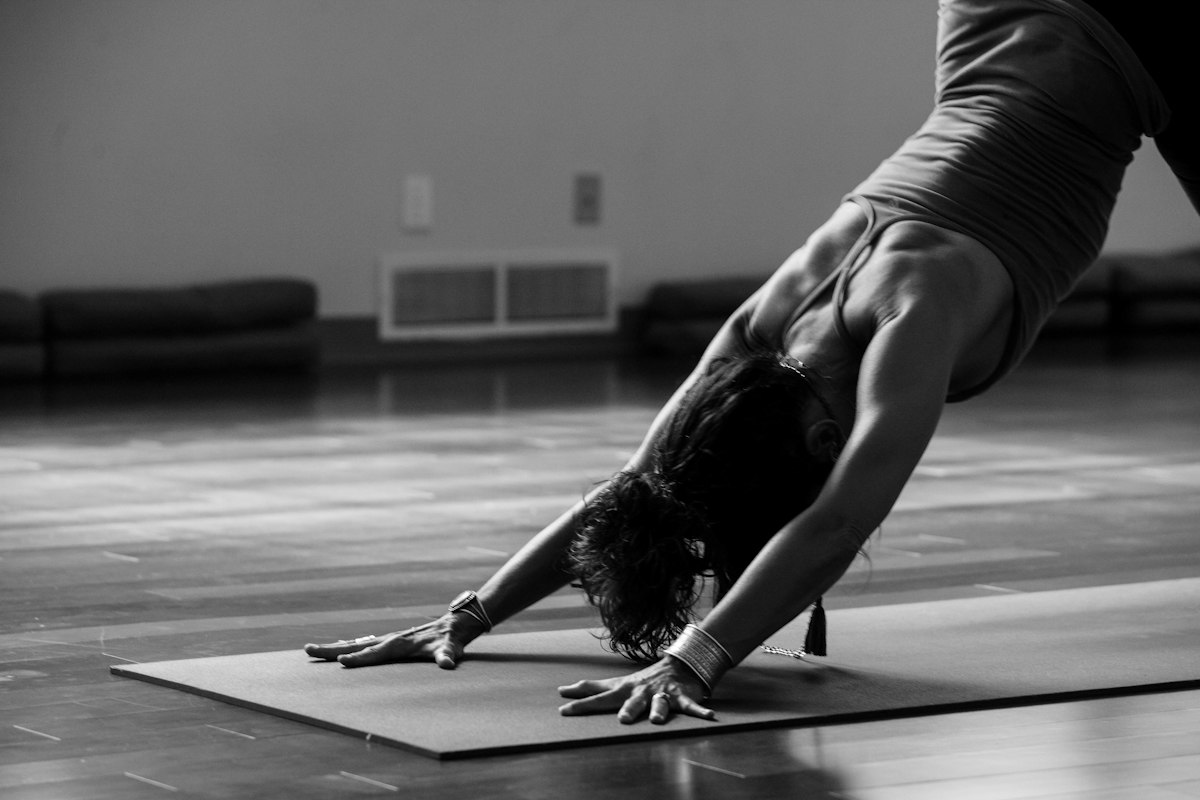
Yoga has a reputation that can be intimidating before anyone has even unrolled a mat. Photographs show impossibly bendy bodies in expensive clothes, studios advertise exotic-sounding styles, and there is an unspoken assumption that newcomers need to be flexible, calm and slim before they begin. In practice, most beginner classes are full of ordinary people who simply wanted to move a little more and think a little less.
This article is a general introduction. It explains what yoga is, what equipment is actually useful, which styles tend to suit newcomers, a few gentle poses people often meet first, and the worries that come up most often. It is background reading, not a medical recommendation, and anyone with an injury, pregnancy or health condition should check with a doctor or qualified teacher before starting.
What yoga is, in plain terms
Yoga is an ancient practice from South Asia that has evolved into many forms. In most modern classes, it combines physical postures, called asanas, with controlled breathing and a period of rest or meditation. Some traditions emphasise philosophy and ethics; others focus mainly on movement and fitness.
For a beginner, the useful way to think about it is as a blend of stretching, gentle strength work and attention to breath. A typical class might begin with a few minutes of sitting or lying quietly, move through standing and floor postures and finish with a final rest. Nothing about it requires belief in anything, and many people attend simply for the movement.
Do you need to be flexible?
One of the most repeated myths is that flexibility is a requirement. Teachers often say the opposite: yoga is a way of gradually exploring flexibility, not a test that demands it. A person who cannot touch their toes is exactly the person many beginner classes are designed for.
Props such as blocks, straps and folded blankets exist to meet the body where it is. Bending the knees in a forward fold or placing hands on a block instead of the floor is not a lesser version of the pose; it is a common and welcome adaptation.
The equipment that is actually useful
The shopping lists that appear online can be long, but the essentials are modest:
- A non-slip mat, since sliding hands or feet makes poses frustrating
- Comfortable clothing that stretches and does not restrict movement
- A towel or small blanket for rest and support
- Optional props such as a block, a strap or a bolster
Most studios lend mats and props, so trying a class before buying anything is common. Shoes are not worn, and there is no need for branded gear. At home, a towel on a carpet will do in a pinch, though a mat is more comfortable and stable.
Styles of yoga beginners often meet
Studio timetables can look like a menu in a foreign language. A rough orientation helps:
- Hatha: a general term for slower, posture-based classes, often a good starting point
- Vinyasa: flowing sequences that link movement with breath, usually more energetic
- Yin: long, passive holds on the floor designed to stretch connective tissue
- Restorative: heavily supported poses with props for deep relaxation
- Ashtanga: a set, athletic sequence, usually found in more experienced classes
- Gentle or beginner classes: labelled as such, with slower pacing and more explanation
Teachers vary as much as styles do, so a person who dislikes one class may enjoy another. Trying two or three before deciding is a normal approach.
Gentle poses people often start with
Certain postures appear in nearly every beginner class because they are simple and widely adaptable. Mountain pose is standing tall with feet grounded and arms by the sides, a way of noticing posture and breath. Cat and cow involves moving the spine between rounding and arching on hands and knees, which many people find pleasant for a stiff back. Child's pose is a resting position, kneeling and folding forward with arms extended or alongside the body.
Downward-facing dog forms an inverted V and is often described as both a stretch and a strengthening pose, though it can feel awkward at first. Bending the knees generously makes it easier. Warrior poses build leg strength and balance, and a seated forward fold or a supine twist often closes the practice. Teachers usually offer variations for each, and listening to the body is stressed over copying the shape on the next mat.
Breath and why teachers talk about it so much
Breathing is a thread running through every yoga class. Teachers often invite students to breathe slowly through the nose, to lengthen the exhale or to link inhales and exhales with movement. The reason is partly practical, since a steady breath tends to slow the pace of a class, and partly because attention to breath is a gentle anchor for the mind.
For beginners, the simplest instruction is to keep breathing normally rather than holding the breath while concentrating. If breath becomes strained or dizzy, easing off the pose or resting in child's pose is entirely acceptable.
Practising at home or in a class
Both settings have advantages. A class provides a teacher who can offer adjustments, explain alignment and keep time, along with the atmosphere of a group. Many newcomers find that a live instructor makes the first few weeks far less confusing.
Home practice offers convenience, privacy and low cost. Online videos and library DVDs are widely used. People who practise at home often begin with short sessions of ten to twenty minutes, in a quiet corner with enough room to stretch both arms. Mixing the two, with an occasional class and regular short sessions at home, is a common pattern.
What to expect in a first class
Arriving a few minutes early gives time to settle, introduce yourself to the teacher and mention any injuries or concerns. Most teachers appreciate a quiet word before class begins and will suggest modifications.
The class itself usually starts with a short centring period, followed by gentle warm-up movements and then a sequence of poses. Instructions are spoken aloud, and demonstrations are given by the teacher. The final rest, often called savasana, involves lying on the back for several minutes. Many first-timers find it the most surprising part, since it is simply being still.
Common worries and how they tend to resolve
Beginners worry about being the least capable person in the room, about falling over, about not knowing the terminology, or about feeling silly during meditation. Teachers have heard all of these and typically welcome questions. Many studios explicitly run introductory courses so that nobody is expected to know the vocabulary on day one.
Another worry is discomfort. Yoga should feel like a stretch or mild effort, not sharp pain. Sharp, pinching or shooting sensations are a signal to ease out of the pose, and ongoing pain is something to discuss with a healthcare professional.
Yoga and everyday wellbeing
People take up yoga for many reasons: to move after a long day at a desk, to relax, to build strength or simply to try something new. Some report feeling calmer or sleeping more easily, while others enjoy the sense of community. Scientific research on yoga includes studies on stress, back discomfort and mood, with results that vary, and yoga should be seen as one pleasant activity among many rather than a treatment.
It also fits well with other parts of a day. A few stretches in the morning can act as a gentle wake-up, a short sequence in the afternoon relieves stiffness from sitting, and a slow evening practice can serve as a wind-down before bed.
Who should check with a professional first
Certain situations call for extra caution. People who are pregnant, have recent injuries or surgeries, high or low blood pressure, glaucoma, osteoporosis or balance problems often receive specific advice about which poses to avoid. Prenatal and therapeutic classes exist for some of these needs. A doctor or physiotherapist can say what suits an individual situation, and an experienced teacher can adapt the practice.
Building a habit that lasts
As with any activity, consistency matters more than intensity. Short sessions several times a week are easier to maintain than a single long session that feels like a project. Many people pair yoga with an existing habit, such as stretching after brushing teeth or following a short routine after work.
Progress in yoga is rarely linear. Some days the body feels open and others it feels stiff, and that is normal. Keeping a loose, curious attitude, celebrating small changes in how a pose feels and keeping attention on your own experience keeps the practice enjoyable.
A short sequence people often start with
Many beginner classes follow a similar arc, and knowing the outline can make the first session less mysterious. It often opens with a few breaths in a comfortable seat, followed by gentle neck and shoulder rolls. Next come cat and cow on hands and knees, a slow downward-facing dog, a low lunge on each side and a standing forward fold. A few standing poses, such as mountain, warrior and triangle, build warmth, and the session ends on the floor with a reclined twist, a hamstring stretch and the final rest.
At home, someone might shorten this to ten minutes: cat and cow, child's pose, a gentle lunge on each side, a seated forward fold and a minute lying quietly. The point is not to master the shapes but to become familiar with moving slowly and noticing sensations.
Etiquette and what to wear
Yoga studios have a few unwritten customs that are easy to learn. Phones are silenced, shoes are left at the door, and talking is kept to a minimum once class begins. Arriving early is appreciated, and so is cleaning a borrowed mat. If someone needs to leave early, quietly telling the teacher beforehand is the polite approach.
Clothing should allow movement without constant adjustment. Fitted tops that stay put during forward folds and leggings or shorts that stretch are popular, though loose tracksuit bottoms work just as well. Layers are useful, since the body cools during the final rest.
Practising safely and listening to the body
Yoga is often described as gentle, but injuries do occur when people push too far, too fast. Teachers frequently encourage students to back off from any pose that causes sharp pain, tingling or pinching, and to treat discomfort as information. Joints, particularly knees, wrists and the lower back, benefit from attention to alignment.
Warming up before deeper stretches, using props generously and keeping attention on one's own mat are common safety habits. If a pose does not feel right, resting in child's pose is always an option, and no teacher expects a student to complete every posture.
Yoga and other activities
Because yoga emphasises flexibility, balance and breath, it is sometimes paired with other forms of exercise. Runners use it to stretch after training, cyclists to loosen hips, and people who sit at desks to counteract stiffness. Strength training, walking and swimming all complement it, and many people find that a weekly class slots easily into an existing routine.
It can also be adapted for different stages of life. Chair yoga is available for those with limited mobility, prenatal classes for expectant parents and family classes for children. This adaptability is one reason the practice has stayed popular for so long.
Questions beginners often ask
How often should someone practise? Many teachers suggest that two or three short sessions a week are enough to notice how the body responds, and that more can be added if it feels enjoyable. How long before it feels easier? Most people report that the vocabulary and the shapes start to feel familiar after a handful of classes, though flexibility and strength change more gradually. Is it a workout? It can be, depending on the style, but it can equally be a gentle stretch. Does it replace other exercise? Yoga is one activity among many, and most health guidance encourages a mix of movement types across the week.
Bringing it together
Starting yoga requires less than most people expect: a mat or towel, comfortable clothes, a willingness to move slowly and a little curiosity. Classes and styles vary, gentle poses are widely available and breath is the common thread. Whether practised at home or in a studio, the most useful starting point is usually a beginner-friendly session and an open attitude. Questions about suitability are answered by a doctor or qualified teacher, and everything else tends to become clear through experience.
This article is for general information only and isn’t medical advice. Talk to a doctor or registered dietitian before making changes to your diet, especially if you have a health condition or take medication.